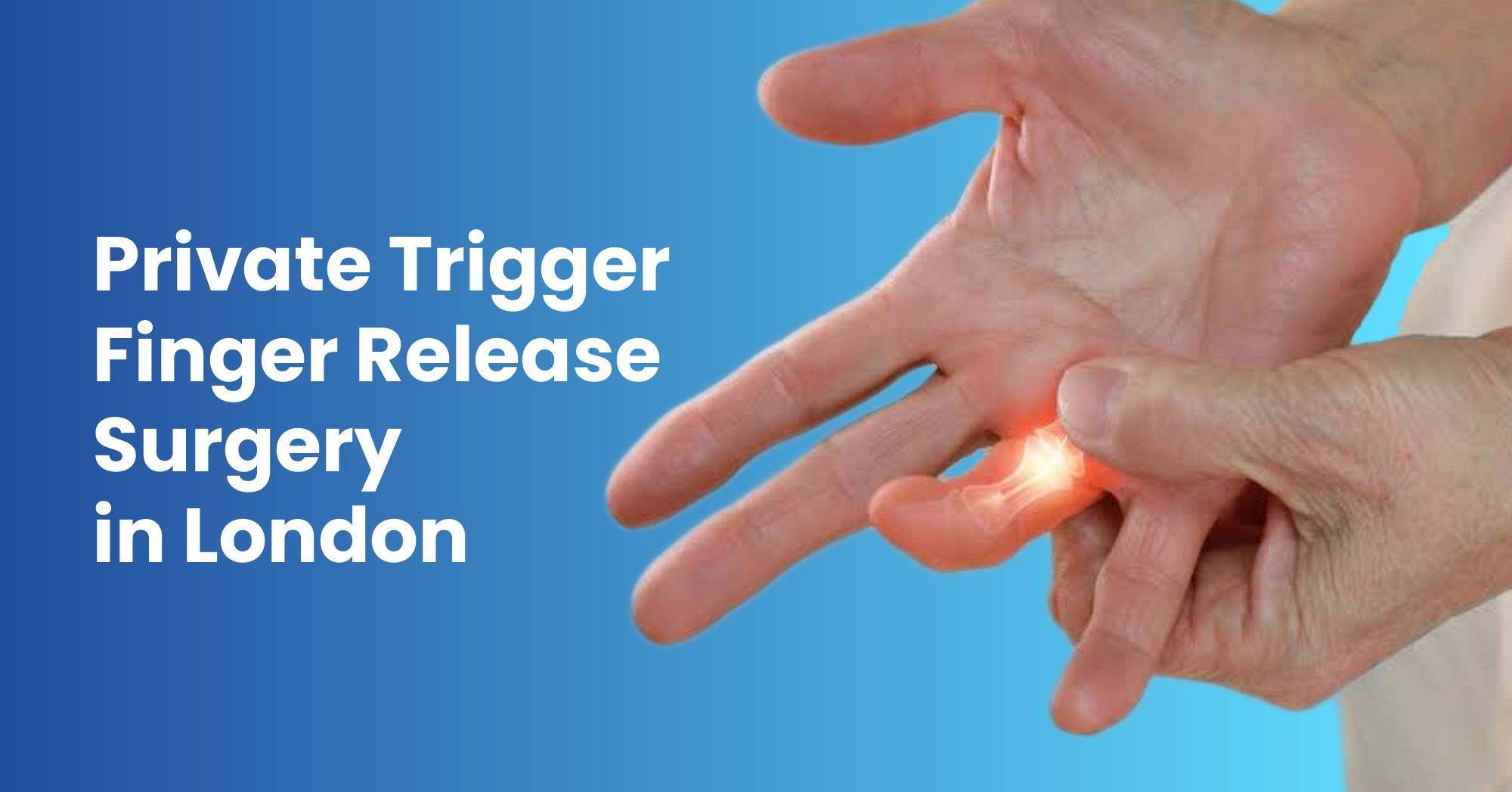
You do not realise how much you rely on your fingers until one of them stops moving properly. It may start with a little stiffness in the morning, a click when you bend your finger or a sudden feeling that the finger is catching.
At first, it is easy to ignore. But when the problem starts affecting your work, sleep or simple everyday activities, it deserves proper attention. For patients whose symptoms continue despite non-surgical treatment, Private Trigger Finger Release Surgery in London can provide a reliable way to restore smoother finger movement.
At Align Orthopaedics, treatment starts with understanding the problem properly, looking at all suitable options and recommending surgery only when it is appropriate for the individual patient.
Trigger finger is a common hand condition, but that does not mean you have to simply put up with it. With the right assessment, most patients can understand why their finger is catching and what can be done to improve it.
What Is Trigger Finger?
Your fingers move through a system of tendons and pulleys. The tendons connect the muscles in your forearm to your fingers and allow them to bend and straighten smoothly.
Trigger finger develops when one of these tendons or the surrounding pulley becomes thickened or irritated. The tendon then has difficulty gliding normally through the pulley.
This is what causes the familiar catching or clicking sensation.
Some people notice that the finger locks when they try to straighten it. Others experience pain or tenderness at the base of the finger, particularly when gripping something. In more advanced cases, the finger can remain bent and may need to be straightened using the other hand.
The condition can affect any finger, including the thumb, and more than one finger can sometimes be involved.
While the symptoms may initially seem minor, persistent catching can make ordinary activities surprisingly frustrating.
When Should You See a Trigger Finger Specialist?
You do not necessarily need surgery simply because your finger clicks.
The important thing is to pay attention to how often the symptoms occur and whether they are beginning to affect your everyday life.
Consider seeing a trigger finger specialist London patients can rely on if:
-
Your finger regularly catches or locks
-
Stiffness is worse in the morning
-
You have pain or tenderness at the base of the finger
-
The finger becomes stuck in a bent position
-
You need your other hand to straighten it
-
Symptoms are affecting work, hobbies or daily activities
-
The problem has continued despite simple treatment
A specialist assessment can also make sure that trigger finger is actually the cause of your symptoms. Other hand conditions can cause pain and stiffness, so an accurate diagnosis is an important first step.
Treatment Does Not Always Mean Surgery
Many patients are understandably concerned that seeing a specialist will automatically lead to an operation.
That is not the case.
Depending on the severity of the condition, your consultant may initially recommend measures such as modifying activities that aggravate the finger, wearing a splint or considering an injection.
The most suitable approach depends on your symptoms, how long you have had them and how much the condition is affecting your hand.
Some patients improve with non-surgical treatment. Others continue to experience catching or locking despite these measures. When symptoms persist, release surgery may offer a more definitive solution.
The aim is not to choose the most aggressive treatment. It is to choose the treatment that is most likely to give you a lasting improvement.
When Private Trigger Finger Release Surgery in London May Be Recommended
Surgery may be considered when the finger continues to catch or lock despite conservative treatment, or when the symptoms are having a significant effect on your daily life.
The procedure is designed to release the tight pulley that is restricting the tendon. Once the tendon has enough room to move freely, the catching and locking can be relieved.
For some patients, the decision to have surgery is less about pain and more about getting their normal hand function back.
A musician may want to play without worrying about a finger locking halfway through a performance. A tradesperson may need reliable grip and finger movement at work. Someone who spends the day at a computer may simply want to type without discomfort.
These individual priorities are important when discussing treatment.
Why Choose Align Orthopaedics for Trigger Finger Surgery London?
When you search for trigger finger surgery London, you will find many providers offering treatment. Choosing the right specialist, however, involves more than finding somewhere that performs the procedure.
At Align Orthopaedics, patients are assessed by experienced consultant orthopaedic specialists with expertise in conditions affecting the hand and wrist. The practice brings together surgeons, physiotherapists, radiologists and other musculoskeletal professionals, allowing treatment to be considered from more than one perspective.
The focus is on understanding the patient rather than simply treating a diagnosis.
Your consultant will consider your symptoms, occupation, lifestyle and previous treatment before recommending what to do next. If surgery is appropriate, you will have the opportunity to discuss the procedure, recovery and potential risks before making a decision.
For private patients, this also means access to specialist assessment and treatment within a streamlined care pathway.
Meet Your Hand and Wrist Specialist
Choosing an experienced surgeon is an important part of your treatment decision.
Mr Daniel Williams, Consultant Trauma and Orthopaedic Upper Limb Surgeon at Align Orthopaedics, specialises in conditions affecting the hand, wrist, elbow and shoulder. His clinical interests include trigger finger, carpal tunnel syndrome, Dupuytren’s contracture, De Quervain’s disease, hand and wrist trauma and minimally invasive surgery.
His specialist training includes a two-year fellowship at the Brisbane Hand and Upper Limb Unit in Australia, following orthopaedic training in London. He also provides NHS elective and trauma care within Barts Health NHS Trust. View Mr Daniel Williams’ specialist profile
Patients may also benefit from the expertise of other hand and wrist specialists within the Align Orthopaedics team, including Mr Kalpesh Vaghela and Miss Suan Khor.
This depth of specialist experience is particularly valuable when a patient needs more than a straightforward procedure and wants a considered opinion about the best way forward.
What Happens During Your Consultation?
Your first appointment is primarily about getting answers.
Your consultant will ask when the symptoms started, how often the finger catches, whether it becomes locked and what activities make the problem worse. The affected hand and finger will then be examined to assess movement, tenderness and tendon function.
In many cases, trigger finger can be diagnosed through the clinical assessment alone. Further investigations may be recommended if your symptoms suggest another condition or if additional information is needed before treatment.
You will also have an opportunity to discuss the practical side of treatment.
If you work with your hands, play sport or have other activities that are important to you, tell your consultant. These details can help shape the treatment and recovery plan.
What Happens During Trigger Finger Release Surgery?
Trigger finger release is usually a relatively short procedure and is commonly performed as a day case.
The surgeon releases the part of the pulley that is restricting the tendon. This creates more space and allows the tendon to glide normally again.
Your consultant will explain the type of anaesthesia being considered and what you can expect before, during and after the procedure.
Although trigger finger release is a commonly performed operation, the structures in the hand are small and closely positioned. Careful technique and appropriate specialist experience remain important.
The objective is straightforward: relieve the restriction while protecting normal hand function.
Recovery After Trigger Finger Release
Recovery varies between patients.
You may have some soreness, swelling or tenderness around the surgical area during the first part of your recovery. Your surgical team will provide specific advice on wound care, movement and when you can safely return to different activities.
Light everyday activities can often be resumed relatively soon, but people whose jobs involve heavy lifting, repetitive gripping or manual work may need more time.
It is also normal for the hand to feel slightly stiff or tender while the tissues heal. The improvement in finger movement may be noticeable early, but complete settling of the surgical area can take longer.
Following your consultant’s advice is an important part of achieving a good recovery.
What Results Can You Expect?
The purpose of surgery is to stop the tendon from catching and restore smoother movement of the affected finger.
Many patients find that the mechanical catching improves significantly following release. However, the hand may still feel tender around the surgical site for a period of time.
If the finger has been stiff or locked for a long time before treatment, recovery may take longer. This is one reason not to ignore persistent symptoms.
The sooner you understand what is causing the problem, the sooner you can make an informed decision about treatment.
Why Consider Private Hand Surgery in London?
When a hand problem begins affecting your everyday life, waiting for answers can be frustrating.
Private treatment provides access to specialist assessment and allows patients to discuss their options directly with experienced consultants. For many people, the value is not simply the convenience. It is having enough time to understand the diagnosis, ask questions and make a decision without feeling rushed.
Align Orthopaedics offers specialist care for a wide range of hand and wrist conditions in London, supported by a multidisciplinary team and a patient centred approach.
If surgery is recommended, your consultant can explain the procedure, expected recovery and potential risks so that you know what to expect before making your decision.
Take the Next Step
A finger that catches occasionally may not seem like a serious problem. But if it is happening every day, waking you at night or getting in the way of work and activities you enjoy, it is worth finding out why.
An assessment does not automatically mean surgery. It gives you a diagnosis and a clear understanding of your options.
If you are considering Private Trigger Finger Release Surgery in London, Align Orthopaedics can provide specialist assessment and personalised advice from experienced hand and wrist consultants.
Contact Align Orthopaedics to arrange a consultation and take the first step towards getting comfortable, reliable movement back in your hand.
Frequently Asked Questions
Is Private Trigger Finger Release Surgery in London Painful?
The procedure is performed using appropriate anaesthesia, so you should not feel the surgery itself. Some soreness, swelling or tenderness can be expected during the early recovery period. Your consultant will explain what you can expect and how to manage discomfort after the procedure.
How Long Does Trigger Finger Surgery London Take?
Trigger finger release is generally a short procedure and is commonly performed as a day case. The exact arrangements depend on your individual circumstances and the treatment plan recommended by your consultant.
Do I Always Need Surgery for Trigger Finger?
No. Depending on the severity and duration of your symptoms, your consultant may recommend options such as activity modification, splinting or injections before considering surgery.
How Quickly Can I Return to Work After Trigger Finger Release London?
This depends on your occupation and how your hand is recovering. Someone with an office-based role may return to work sooner than someone whose job involves heavy lifting or repetitive hand movements. Your consultant will provide advice specific to your situation.
Can Trigger Finger Return After Treatment?
Recurrence can occur, although trigger finger release is designed to address the restriction causing the tendon to catch. Your consultant will discuss the expected benefits and potential risks during your consultation.
Why Choose a Hand Specialist for Trigger Finger?
A hand and wrist specialist has specific experience in diagnosing and treating conditions involving the small and complex structures of the hand. This can be particularly valuable when symptoms are persistent, the diagnosis is uncertain or previous treatment has not worked.