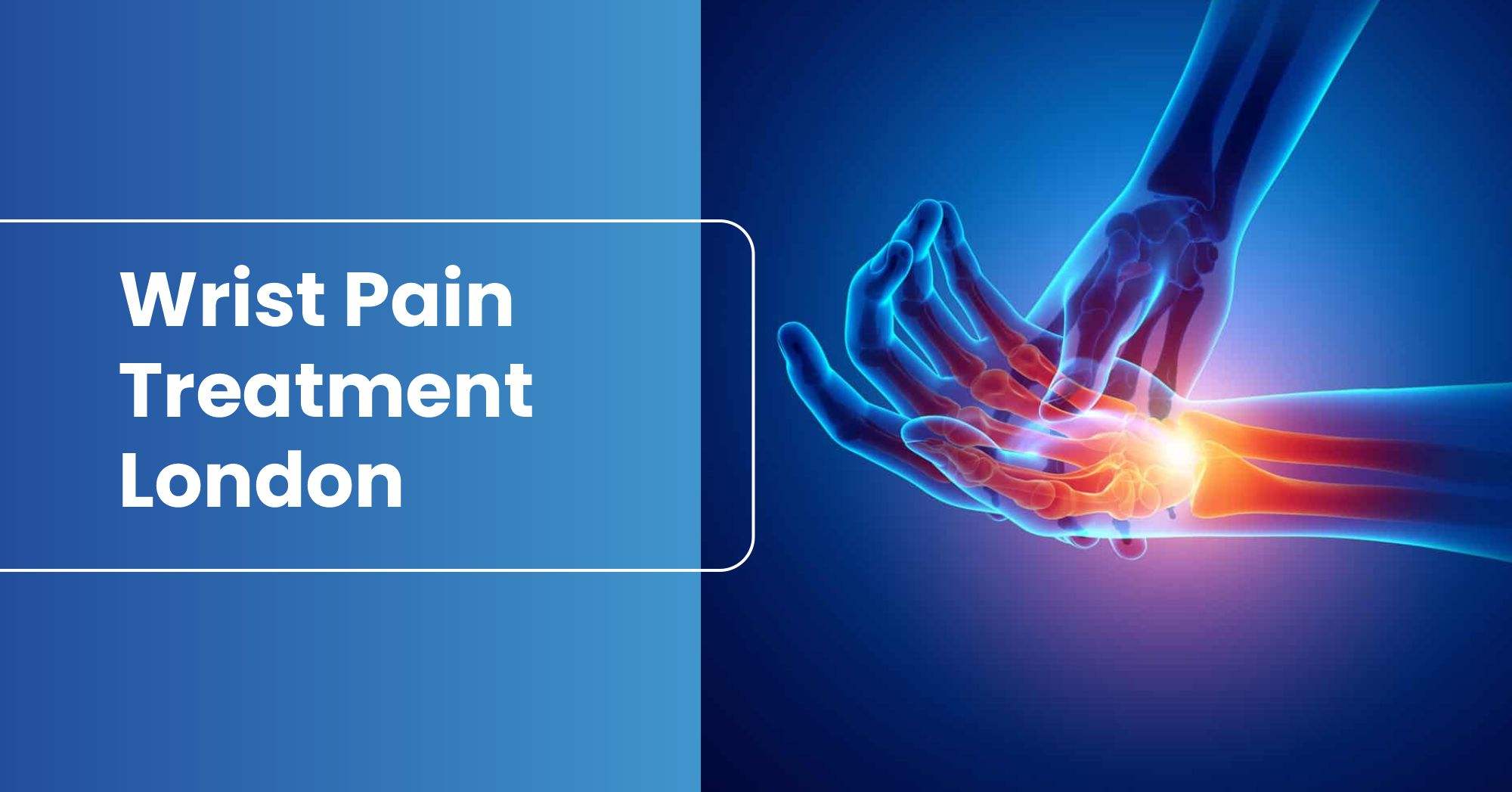
Wrist pain can make even the most mundane tasks in life painful. Opening a difficult jar, typing, picking up your child, dialling on the phone, or simply getting up from your chair can all be painful.
Wrist Pain Treatment London: The Importance of Accurate Diagnosis and Treatment
While injuries can be obvious, pain can also be insidious, and you may not know the origin of your pain.
For Wrist Pain Treatment London UK, the first and most important step is finding the source of the pain. The hand and wrist specialists at Align Orthopaedics have many years of experience assessing and treating patients and develop a treatment plan based on your individual needs and circumstances after assessing your diagnosis and symptoms.
When Wrist Pain Starts Getting in the Way
Wrist pain is something that can easily be put off.
You may think it is due to overuse and that it will resolve on its own with some rest. If that is the case, then you may be right. In many cases, pain caused by overuse will resolve with rest.
However, persistent pain is different.
Persistent pain will not go away until it is properly addressed.
You may be able to pinpoint the onset of new, bad habits when you begin to feel pain while shifting and changing positions throughout the day, such as when reaching for a door handle or picking something up. Wrist pain after physical activity, such as computer work, is also something you may notice. Your wrist may feel stiff after computer work, and aching may occur after physical exercise.
There are many factors that may be responsible for wrist pain.
There may be no apparent cause for your pain. Pain may be caused by various factors, such as a wrist injury, tendon injury, wrist ligament injury, arthritis, nerve compression, or an old injury.
A wrist pain specialist may be consulted because pain can be caused by various factors, such as a wrist injury, tendon injury, wrist ligament injury, arthritis, nerve compression, or an old injury.
Your wrist pain specialist will be able to perform a detailed assessment and examine you to draw a conclusion. Additionally, they will review your medical history.
Your wrist pain may be caused by several factors, such as an injury to one or more of the many parts of the wrist, including bones, joints, ligaments, tendons, and/or nerves. A single injury to the wrist may disrupt the way the wrist functions as a whole.
A fall onto the wrist may cause a wrist fracture or a wrist ligament injury. Repetitive injury or irritation may affect a wrist tendon. Arthritis may cause pain and stiffness in a wrist joint. Some individuals may experience pain years after an injury to the wrist.
Although pain may be experienced in one place, it is not enough to provide an answer.
Pain on the thumb side of the wrist can be caused by something different from pain on the little finger side. Distinguishing pain that occurs during gripping from pain that is present when the hand is at rest is also important.
Your history is equally important.
When did the pain start? Has the pain become worse? Have you had any previous injuries to the wrist? Does a specific movement provoke the pain?
These types of questions are considered part of a complete assessment.
Why a Wrist Pain Diagnosis London Specialist Matters
There is no one treatment for wrist pain because there is no one cause of wrist pain.
This may seem like an obvious statement, but it is an important point.
If your wrist pain is caused by tendon irritation, then the course of treatment you receive will be different from the treatment for a fractured wrist. The treatment for arthritis will also be different from treatment for tendon issues, and so on.
At Align Orthopaedics, we discuss your history and symptoms. We then conduct a detailed examination to assess the affected area. Depending on the reason for your visit, we may perform additional tests such as X-rays, CT, or MRI scans. (alignorthopaedics.co.uk)
The goal is to obtain more information in order to formulate a plan.
Often, the plan is non-surgical treatment.
It may involve physiotherapy.
In some cases, surgery is necessary.
In order for treatment to be effective, the proper diagnosis must be made first.
Wrist Pain Treatment London: May Require Specialist Care
Some wrist problems will recover with time and appropriate treatment.
Others do not.
Pain that does not improve with treatment, returns, or stops you from working or enjoying your normal activities may need a specialist assessment.
Pain after an injury that does not improve, swelling, reduced range of motion, or loss of wrist strength may also need a specialist assessment.
You may have a diagnosis but still be unsure of what to do next. Perhaps you have been told you have arthritis, a tendon injury, or an old fracture and want to know if surgery is needed.
A specialist assessment will clarify the issues.
Align Orthopaedics also offers second opinions to patients who are unsure about a proposed diagnosis or treatment plan, or recommendations for surgery. (alignorthopaedics.co.uk)
Why Choose Align Orthopaedics for Wrist Pain Treatment in London?
If you search for wrist pain treatment in London, you will see many options.
The question is not just about where you can be seen. It is about whether the person assessing you has relevant experience specific to the type of wrist problem you have.
Within its orthopaedic practice, Align Orthopaedics has a dedicated hand and wrist team. The practice brings together a number of orthopaedic specialists, along with supporting physiotherapists and other allied professionals.
This London practice is situated at 119 Harley Street. (alignorthopaedics.co.uk)
The practice has developed a unique, personalised approach to treatment that centres on the patient, rather than starting treatment with surgery, as is often the case in orthopaedic practice. (alignorthopaedics.co.uk)
For private wrist treatment in London, having a team to support the various stages of treatment is very valuable.
Mr Daniel Williams: Specialist Experience in Wrist and Upper Limb Conditions
One of the specialists at Align Orthopaedics is Mr Daniel Williams, who is a Consultant Trauma and Orthopaedic Upper Limb Surgeon and specialist in the hand, wrist, elbow, and shoulder.
His areas of interest are listed as hand and wrist trauma, scaphoid and wrist fractures, ligament injuries, nerve and tendon injuries, wrist pain, osteoarthritis and rheumatoid arthritis, post-traumatic pain, and reconstruction. His practice also includes minimally invasive arthroscopic surgery. (alignorthopaedics.co.uk)
Mr Williams completed his orthopaedic speciality training in London and then undertook a two-year fellowship at the Brisbane Hand and Upper Limb Unit in Australia. He also provides both elective and trauma care through Barts Health NHS Trust and is engaged in teaching and research. (alignorthopaedics.co.uk)
This experience is very valuable to patients suffering from wrist pain of a non-specific nature.
Pain in the wrist can involve multiple structures, and to understand the multifactorial nature of wrist pain, one must also understand the wrist in relation to the upper limb.
The hand and wrist team at Align also includes Mr Kalpesh Vaghela, Consultant Trauma and Orthopaedic Hand & Wrist Surgeon, and Miss Suan Khor, Consultant Trauma and Orthopaedic Hand & Wrist Surgeon. (alignorthopaedics.co.uk)
Treating Wrist Pain in London UK Starts with the Cause
It can be very frustrating to live with wrist pain for which the cause is unknown.
You may have rested it, supported it, taken pain relief, and been advised to avoid certain activities and/or modify others.
These measures can help; however, if the pain continues, it is necessary to investigate the cause of the problem.
Knowing the cause is important.
Your specialist will ask about the onset of symptoms, what aggravates or eases the symptoms, and whether the symptoms are related to previous injuries and/or treatments.
Pain in the wrist may affect your ability to do your job, play a sport, or perform activities of daily living, such as driving or cooking.
Pain in the wrist may stop you from doing all of these. It is essential to describe these limitations to your specialist.
Arthritis of the wrist may cause ongoing pain.
It can also start right after an injury. Symptoms include wrist pain, stiffness, and limited movement. It occurs most often when a person performs activities that involve heavy wrist use.
The severity of the arthritis and how it affects you will determine the appropriate treatment.
Sometimes, the pain can be managed without surgery. Modification of your activities and the use of medication, splints, injections, and physiotherapy may be used.
Surgical intervention is appropriate in some cases of advanced arthritis.
There is no single surgery that can be used for all cases of wrist arthritis. The location of the arthritis, the condition of the wrist joint, and the expectations of the patient will be considered.
This is one of the many reasons a detailed assessment by a specialist is imperative.

Tendonitis of the Wrist in London
Tendons connect the muscles to the bones and help the wrist and hand move.
Tendonitis is inflammation of a tendon that is experienced after excessive and/or repetitive use of a particular body part. Wrist tendonitis causes pain when you repeatedly use your wrist during gripping and lifting movements.
Rest and activity modification are sometimes sufficient. Physical therapy and other forms of treatment may also be used.
Persistent symptoms deserve a formal evaluation when they are causing a disruption to your daily activities.
When you have wrist pain, consulting a wrist specialist in London who can examine your symptoms may be helpful.
When Is Wrist Surgery London Necessary?
Surgery is considered a last option for many wrist problems.
Most patients will never have to undergo surgery for their wrist problems.
Certain complications may require surgery to restore function, address structural issues, or both.
These include advanced and unresponsive arthritis, ligament injuries, complex fractures, and other similar cases. Surgery should be considered after a formal diagnosis.
Your surgeon should discuss with you the causes and effects of surgery and its alternative solutions.
The experts at Align Orthopaedics state that they consider a multidisciplinary approach and perform surgery when it is required, especially for complex wrist issues. (alignorthopaedics.co.uk)
Your appointment with them should help you understand your issue and the available solutions.
Your specialist at Align Orthopaedics performs a thorough evaluation. They will listen to you and perform a physical examination. In some cases, X-rays may be required. (alignorthopaedics.co.uk)
Feel free to ask your specialist questions at any time during the appointment.
Why do I have this problem?
What treatment should I expect?
How much time will it take?
What will be the time required to return to work and sports?
Don’t wait until the end of the appointment to ask what is bothering you the most.
Understanding how your wrist problems impact your daily routine will help your specialist develop the required treatment.
Recovery Is an Important Part of Treatment
Wrist pain treatment involves addressing the cause as well as the recovery process if surgery is required.
Different surgeries require different post-operative recovery restrictions. For example, after surgery to repair a torn avulsion fracture, initial recovery may require immobilisation, with gradual restoration of movement over time.
Physical therapy may be suggested to aid restoration of movement and strength.
At this point, you may have noticed that each individual case of injury will be unique. The specific case will affect the time and type of recovery.
Jobs make a difference as well. Desk jobs will not affect recovery in the same way as manual labour or a return to competitive sport.
Post Operative Wrist Pain Therapy and Management
The wisdom behind private treatment is that the patient’s needs are met in a way that public services cannot, such as having time to ask questions and understand the particular case instead of rushing the treatment.
Private consultations for musculoskeletal conditions and use of private health clinics in London and Essex are available from Align Orthopaedics. The practice can also arrange diagnostic imaging and access to specialised procedures, as required. (alignorthopaedics.co.uk)
For self-funding patients, Align provides a quote when surgical intervention is necessary. In addition, the practice works with all major private medical insurance companies. (alignorthopaedics.co.uk)
The practice is located at 119 Harley Street in London, as are many private health clinics. Other private health clinics in London that are accessible from this practice location include The London Clinic, HCA London Bridge Hospital, The Princess Grace Hospital, and One Welbeck. (alignorthopaedics.co.uk)
Do Not Let Wrist Pain Become Your Norm!
It is amazing how quickly we can adapt to pain, both physically and mentally, to overcome it.
You may start lifting things with the other hand. Maybe you will stop exercising or doing things that used to give you satisfaction due to minimal wrist use. Pain can become the new normal.
Pain should never become the norm.
If you have nagging wrist pain that has been lingering for weeks or months, or if pain from a previous injury has resulted in decreased function or limited range of movement, it is time to identify the cause of the issue.
Surgery may not be the final answer.
Knowing the cause of the wrist pain and developing a plan will aid in finding the appropriate solution.
When looking for potential Wrist Pain Treatment London, visit Align Orthopaedics for a private consultation with a hand and upper limb specialist.
Start with the problem, understand your options, and then decide what is best for you.
Frequently Asked Questions
Is Wrist Pain Treatment London UK Surgical for Everyone?
No. Surgery is generally a last resort when all non-surgical options fail, and the underlying problem is severe and affecting your everyday life.
When Should I See a Wrist Pain Specialist in London?
You should see a specialist for wrist pain if the pain is constant, comes back regularly, returns after an injury, affects how much you can move your arm, or interferes with work or daily life.
What Happens During An Assessment For Chronic Wrist Pain In London?
Your specialist will talk to you about what you are experiencing, examine your arm, and may recommend an X-ray or an MRI/CT scan.
Can Chronic Wrist Pain In London Be Treated Without Surgery?
Yes. Depending on the diagnosis, treatment may include using a splint, activity modification, oral medications and injections, special forms of therapy, or other rehabilitative methods.
When Is Surgery For Wrist Pain In London Necessary?
Surgery is required for certain severe fractures, arthritis cases, and/or injuries when non-surgical methods have not been successful.
Can Wrist Pain In London Be Caused By An Old Injury?
Yes. Old injuries can worsen and cause wrist pain. A specialist can determine whether an old injury is causing your current pain.
Why Go To A Hand And Wrist Specialist For Wrist Pain?
The wrist is a complicated area. It is made up of many small bones and joints. There are also smaller areas made up of ligaments and tendons, along with nerves. Only a specialist dealing with hand and wrist conditions can look at everything as one complex case to determine the best course of action.
Arrange Your Specialist Consultation
When wrist pain begins to interfere with activities you usually participate in, there is no good reason to keep letting it be the case.
Find out why there is pain.
See what the options are for treatment.
Then come to your own conclusion about what you want to do.
For Wrist Pain Treatment London UK, give Align Orthopaedics a call to book a consultation with an experienced hand and upper limb specialist. The first step is not having surgery. The first step is determining the cause of the pain.